7 min read
How Often Should an Office Be Cleaned? A Practical Schedule and Checklist
How often offices should be cleaned and deep cleaned, with a daily, weekly, monthly and annual checklist for workplaces in Watford and St Albans.
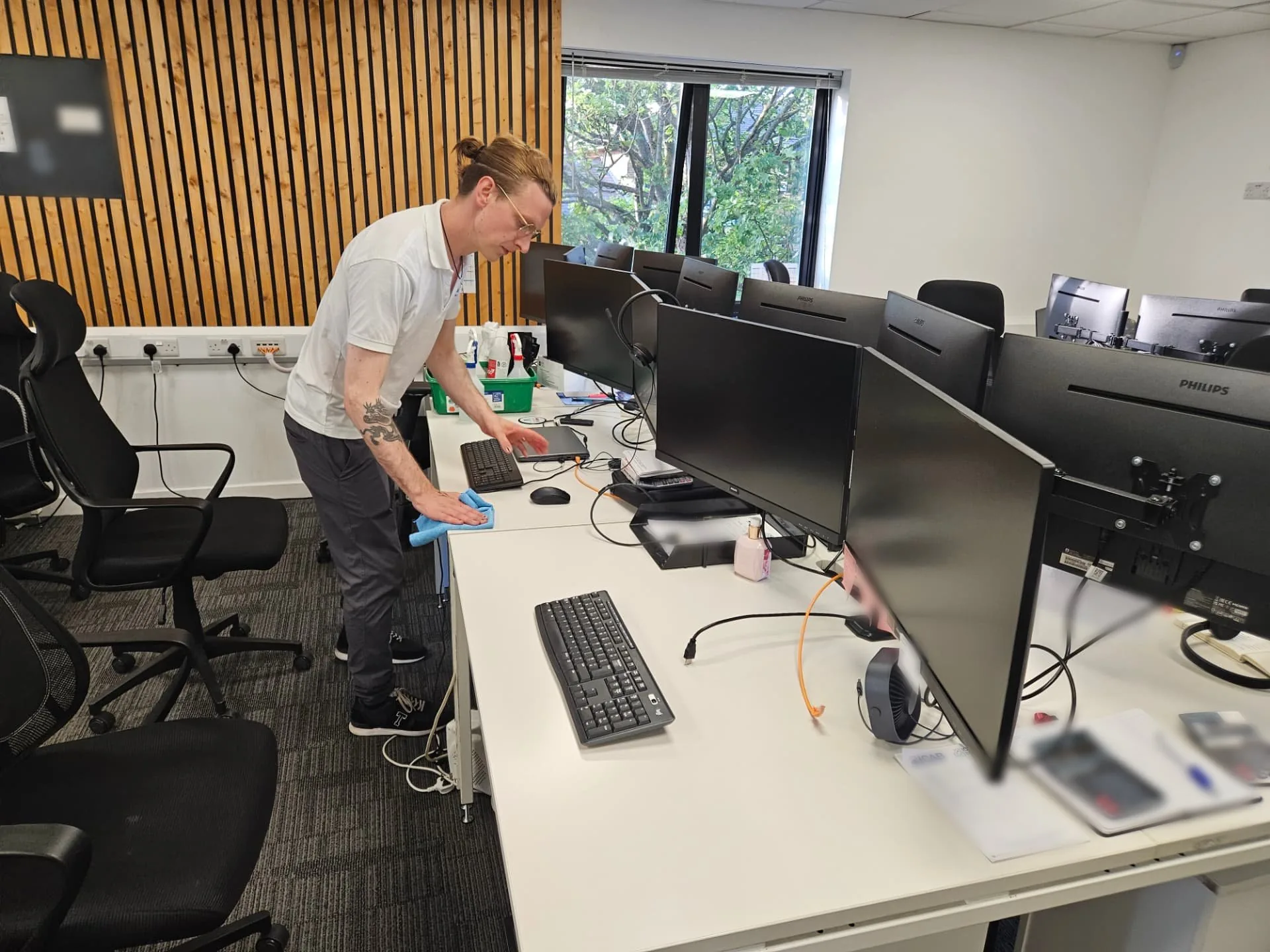
There is no single right answer to how often an office should be cleaned, but there is a right answer for your office. It depends on how many people use it, how often they are in and which areas get the heaviest use. This guide gives you a practical schedule and a checklist you can use to plan or review your office cleaning.
The short answer
- Busy offices used every day usually need cleaning daily, or at least three to five times a week, with washrooms and kitchens covered on every visit.
- Smaller or hybrid offices often work well with two or three visits a week.
- Very small offices with only a few people may manage with one or two visits a week.
- Deep cleaning is best done every three to six months for busy offices, and at least once a year for quieter ones.
What affects how often your office needs cleaning?
Number of people
More people means more waste, more washroom use, more cups and more dirt on the floors. Count the people actually in the building on a typical day, not just the number of desks.
Hybrid working patterns
If most of your team is in on Tuesdays and Thursdays, it makes sense to schedule cleaning around those days rather than spreading visits evenly.
Washrooms and kitchens
These are the areas that set the impression of your workplace and carry the most hygiene risk. Even if the rest of the office can wait, washrooms and kitchens in busy offices usually need attention every working day.
Visitors and clients
Receptions, meeting rooms and client facing areas need to look their best at all times, which often means more frequent attention than back office areas.
Office cleaning checklist
Every visit
- Empty bins and recycling, and replace liners.
- Clean and sanitise toilets, urinals, basins and taps.
- Refill soap, toilet roll and paper towels.
- Clean kitchen worktops, sinks, taps and the outside of appliances.
- Wipe desks and clear surfaces.
- Sanitise touch points such as door handles, light switches, lift buttons and handrails.
- Vacuum carpets and mop hard floors in high traffic areas.
Weekly
- Vacuum and mop all floors, including under desks where clear.
- Dust skirting boards, window sills, shelves and partitions.
- Clean internal glass, mirrors and glass doors.
- Wipe the inside of microwaves and clean the fridge exterior and seals.
- Wipe chairs, phones, keyboards and monitors where agreed.
Monthly
- High level dusting of light fittings, vents and tops of cupboards.
- Clean inside the office fridge and dispose of old food.
- Descale washroom taps, toilets and urinals.
- Spot clean carpet stains and marks on walls and doors.
Every three to twelve months
- A full office deep clean.
- Professional carpet cleaning.
- Hard floor machine scrubbing and polishing.
- Washroom deep cleaning to remove limescale and staining in grout.
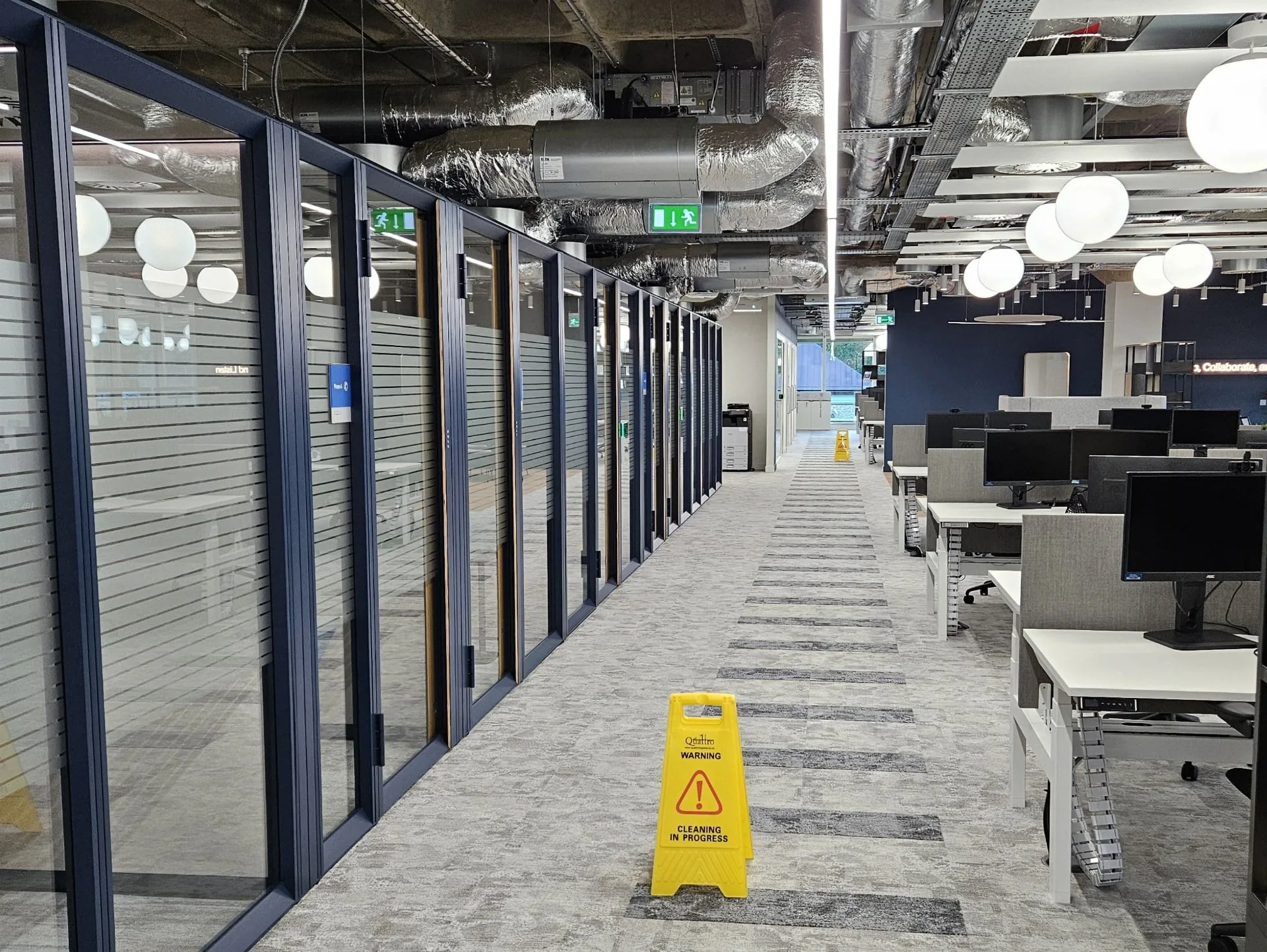
How often should you deep clean your office?
Regular cleaning keeps an office tidy, but it does not reach everything. A deep clean every three to six months keeps carpets, washrooms, kitchens and high surfaces from slowly building up dirt. It is also worth booking a deep clean before a new cleaning contract starts, after building work, or after a period of illness in the team. Our guide to deep cleaning versus regular cleaning explains the difference in more detail.
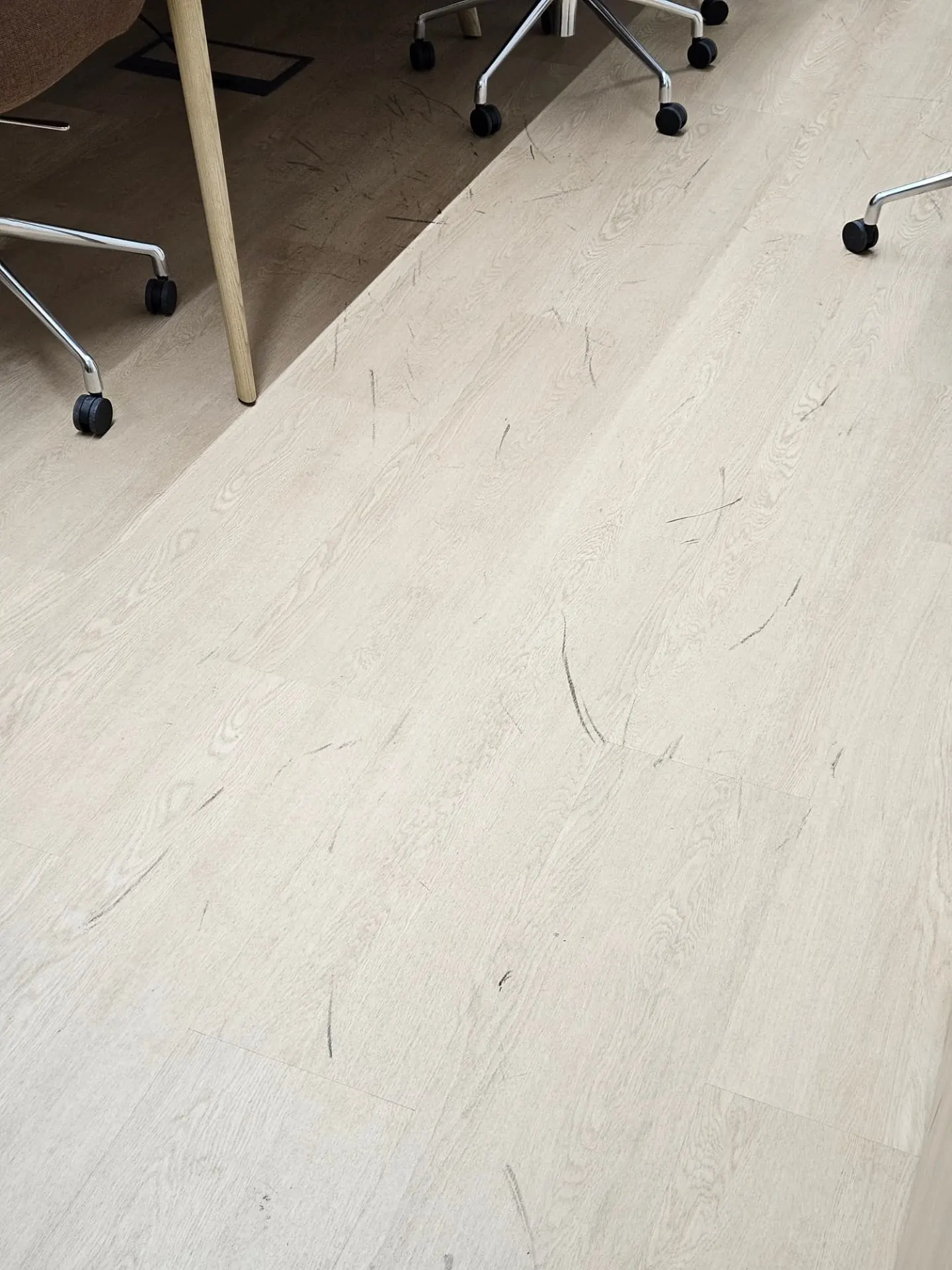
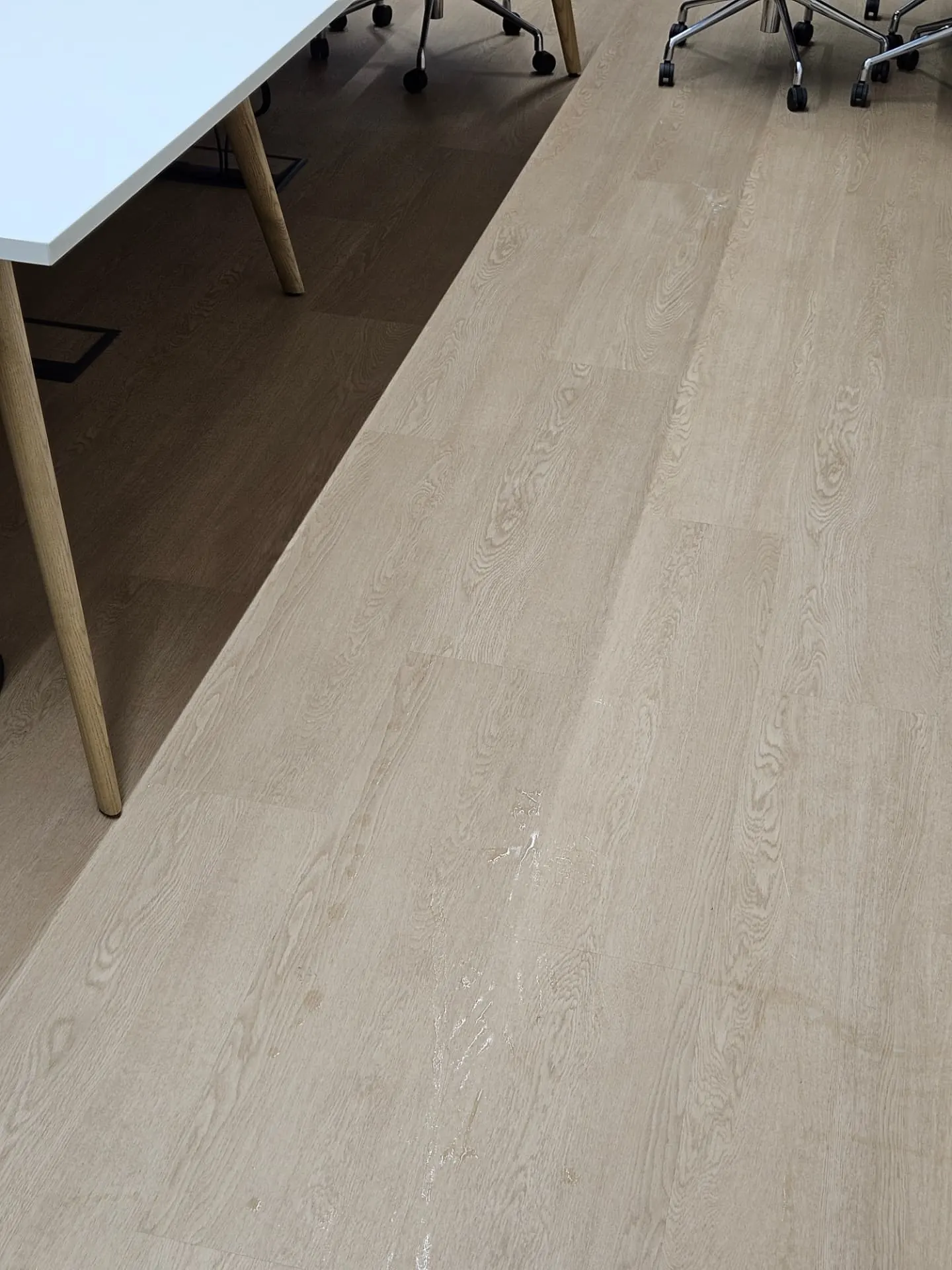
Signs your cleaning schedule is not working
- Bins are full before the next visit.
- Washrooms run out of soap or toilet roll between cleans.
- Staff are cleaning the kitchen themselves.
- Dust is visible on desks, sills or screens.
- Carpets look grey in walkways.
Any of these usually means the schedule needs adjusting rather than more effort on the day. A good cleaning partner will review it with you.
Office cleaning in Watford, St Albans and Hemel Hempstead
Our contract office cleaning is planned around your building and your working pattern, with flexible times and the same trusted team. Prices start from £220 per month + VAT. Use our instant estimate to see a guide price, or book a free site visit and we will recommend a schedule that fits.
Talk to the Cleaníge team
If you'd like to discuss your cleaning requirements or would like more information about our services. Send us a message through the contact form or email us directly and we'll come back with clear next steps.
Blog post at a glance
- Covers
- Cleaning frequencies by office type, with a practical schedule
- Who it's for
- Office and facilities managers
- Good to know
- Frequency follows footfall, not floor area alone
7 min
Read time
Oct 2026
Published