8 min read
How to Clean Vinyl Flooring: A Professional Guide to Vinyl and LVT Floors
How to clean vinyl and LVT flooring without damage: everyday mopping, ground in dirt, stains, what never to use and when to strip and reseal.
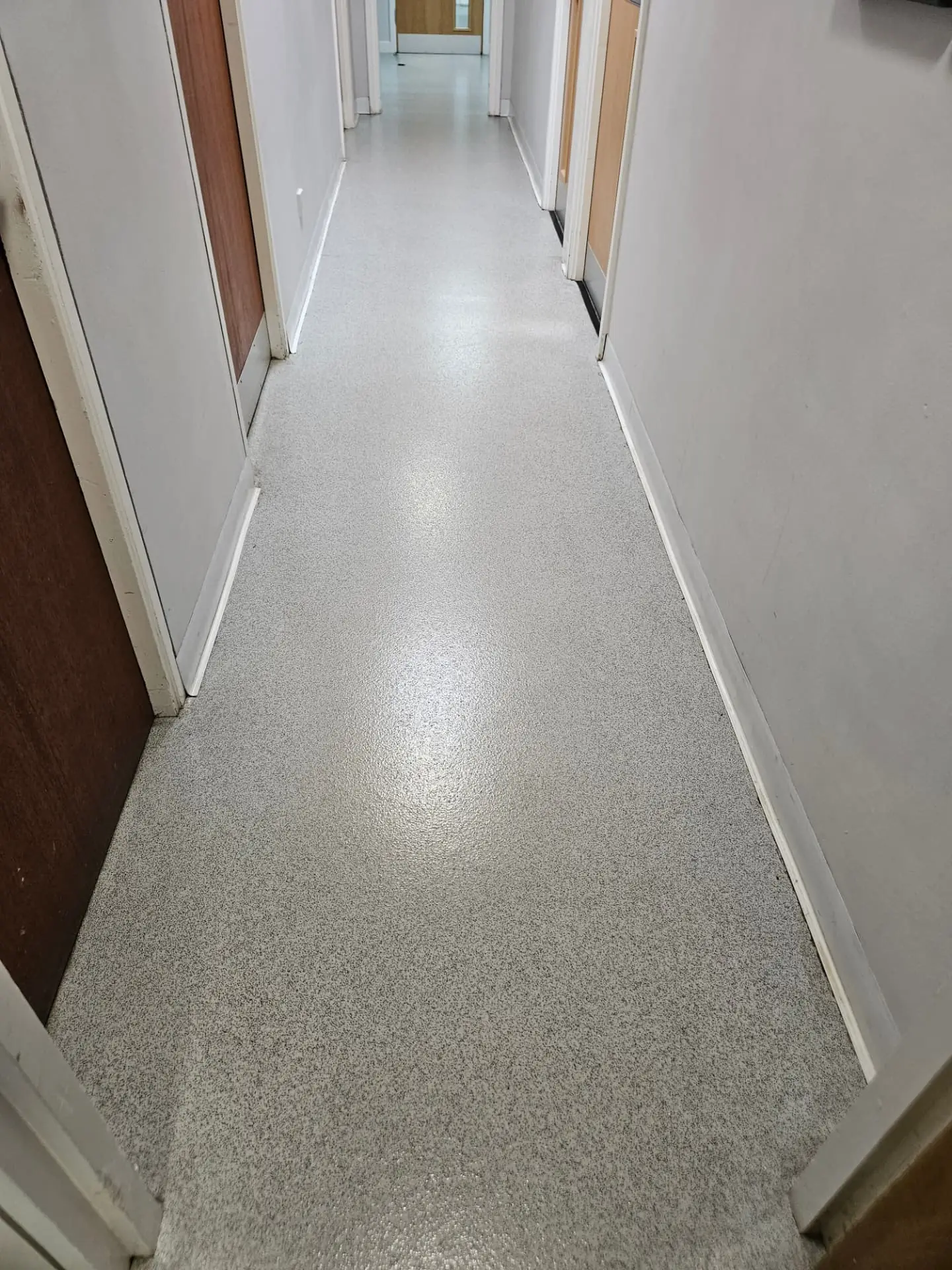
Vinyl is one of the most popular floors in UK homes, offices, schools and washrooms because it is hard wearing, water resistant and easy to look after. Easy to look after does not mean anything goes, though. The wrong product or too much water can leave vinyl dull, sticky, yellowed or lifting at the joins. This guide explains how to clean vinyl flooring properly, from a quick weekly mop to shifting ground in dirt.
The short answer
- Remove loose grit first with a soft broom or a vacuum on its hard floor setting, with the beater bar switched off.
- Mop with a pH neutral floor cleaner diluted in warm water exactly as the label says.
- Wring the mop out well so the floor is damp, not wet.
- Rinse with clean water if the floor feels tacky afterwards, as leftover detergent attracts dirt.
- Let it dry fully before walking on it.
That works for a kitchen or hallway at home. For larger and commercial vinyl floors, a scrubber dryer gives a much better result than a mop, as explained below.
First, know which vinyl floor you have
Sheet vinyl and vinyl tiles
Traditional sheet vinyl and vinyl tiles are common in kitchens, bathrooms, corridors and classrooms. In commercial buildings they are often protected by a layer of floor polish or sealer, which is what gives a corridor its shine and takes the daily wear.
Luxury vinyl tile (LVT)
LVT is the plank or tile style vinyl made to look like wood or stone, from brands such as Karndean and Amtico. Most LVT has a factory applied protective coating, so it usually needs no polish at all. Use only the maintenance products your floor's manufacturer approves.
Safety flooring
Textured slip resistant vinyl is used in washrooms, kitchens and changing rooms. Dirt settles into the texture, so it needs scrubbing with a deck brush or a machine rather than just a flat mop.
How to clean vinyl flooring step by step
- Clear the floor of mats, chairs and bins so you can reach the edges.
- Sweep or vacuum the whole area, paying attention to corners and along skirting boards where grit collects. Grit acts like sandpaper underfoot, so this step does more to protect the floor than any cleaner.
- Make up your solution with a pH neutral cleaner made for vinyl. More product is not better: overdosing leaves a film that looks smeary and picks up dirt.
- Mop in sections, working away from the door so you do not walk over the clean floor. Change the water as soon as it looks grey.
- Rinse if needed with a mop and clean water, then leave the floor to air dry.
Karndean, for example, recommends a soft brush to remove loose dirt followed by a mop with a diluted pH neutral cleaner, removing any excess liquid and letting the floor dry before walking on it.
The professional method: cleaning vinyl with a scrubber dryer
Mopping is fine for small areas, but it is not the best way to clean vinyl. A mop spreads dirty water around and leaves some of it to dry back on the floor. A scrubber dryer is the preferred method wherever there is room to use one, and it is what our team uses on larger vinyl floors.
The machine puts down clean solution, scrubs the floor with rotating brushes or discs, then squeegees and vacuums the dirty water straight back up in the same pass. That gives you:
- A much higher standard of clean. The rotating brushes or discs work dirt out of the surface, and out of the texture of safety flooring, in a way a mop cannot.
- Faster, more efficient cleaning. Corridors, classrooms, washrooms and warehouses are cleaned in a fraction of the time it takes to mop them.
- Drier, safer floors. The dirty water is collected rather than left behind, so the floor can be walked on sooner and less water reaches the seams.
Use brushes or pads and a solution suited to vinyl, and on LVT follow the floor manufacturer's guidance on machine cleaning.
How to clean vinyl floors with ground in dirt
If a normal mop no longer brings the floor back, dirt has worked into the surface or into an old layer of polish. To deal with it:
- Use a stronger floor cleaner that is labelled as safe for vinyl, diluted as directed.
- Work on a small area at a time and agitate with a soft scrubbing pad or a soft bristled deck brush. Never use scourers, wire wool or green kitchen pads, which scratch the surface.
- Pick up the dirty solution with a well wrung mop or a wet vacuum before it dries back onto the floor.
- Rinse thoroughly with clean water so no residue is left behind.
On textured safety flooring and larger floors, a scrubber dryer does this far more effectively than hand scrubbing, because it lifts dirt from the texture and collects the dirty water in one pass.
Removing common marks and stains
- Scuff marks: rub gently with a soft dry cloth or a tennis ball, which Karndean suggests for shoe and furniture scuffs.
- Grease and food spills: wipe up quickly with warm water and a few drops of washing up liquid, then rinse.
- Ink or marker pen: dab with a cloth lightly dampened with isopropyl alcohol, testing a hidden area first, then rinse.
- Dried on spills: soften with a damp cloth for a few minutes before wiping, rather than scraping with anything sharp.
What not to use on vinyl flooring
- Bleach and harsh household cleaners. Karndean advises avoiding household cleaners and bleach based detergents, which can make the floor slippery or cause discolouration.
- Abrasive powders and pads. They leave fine scratches that hold dirt and dull the finish.
- Too much water. Water left standing can seep into seams and under click together planks, lifting edges and weakening adhesive.
- Steam mops, unless your manufacturer says they are safe. Heat and moisture driven into joints can damage many vinyl and LVT floors.
- Wax or oil based polishes on LVT. They build up into a sticky layer that traps dirt.
- Rubber backed mats. Karndean warns that rubber backed entrance mats can discolour vinyl, so choose mats without rubber backing.
Why is my vinyl floor dull, patchy or yellow?
If a vinyl floor still looks tired after a good clean, the cause is usually one of these:
- Detergent residue from using too much cleaner. A rinse with clean water often fixes it.
- Worn polish in walkways, leaving traffic lanes duller than the edges of the room.
- Built up layers of old polish that have trapped dirt and yellowed over time.
- Discolouration from rubber mats, strong sunlight or harsh chemicals, which cleaning cannot always reverse.
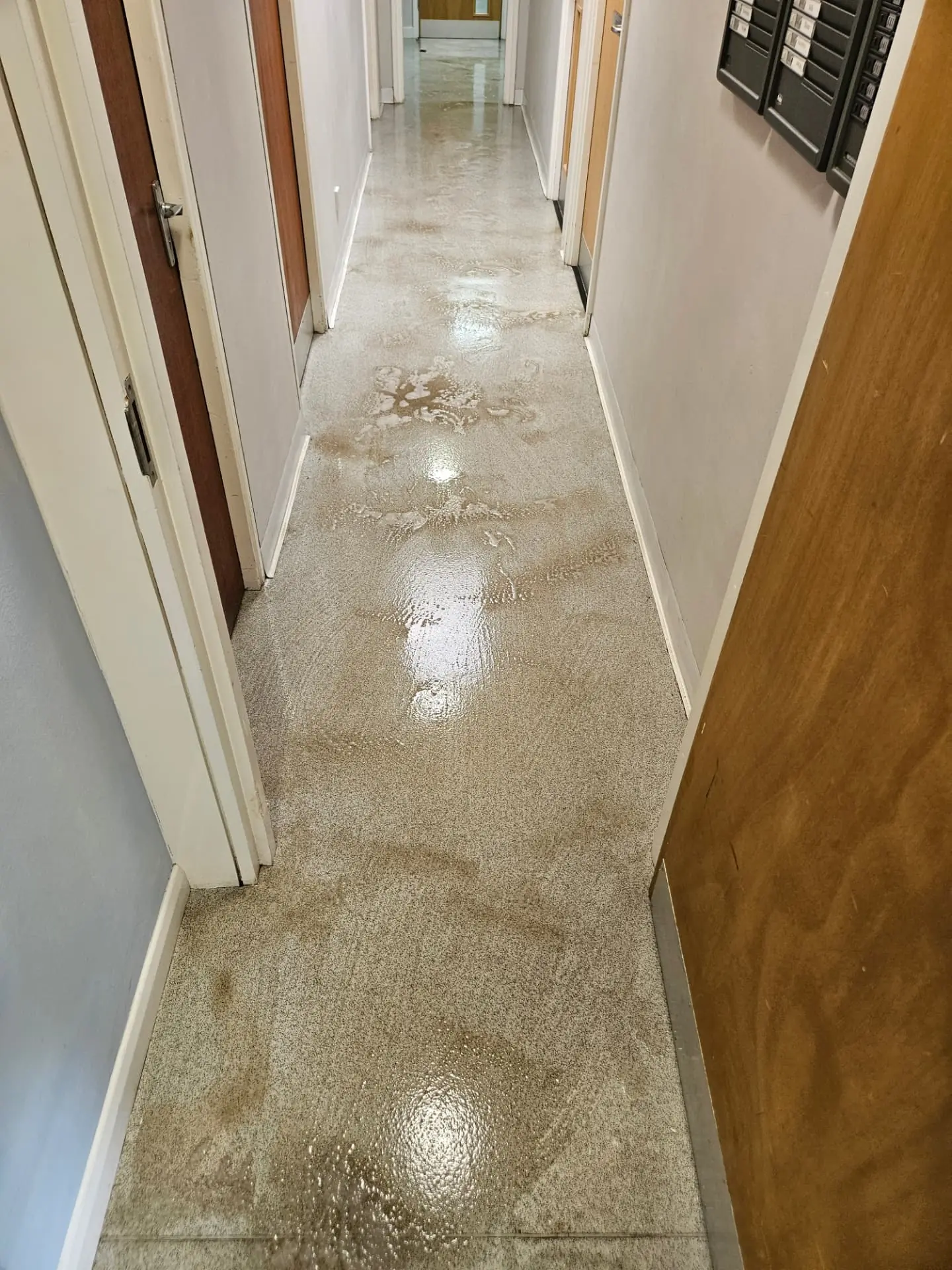
Worn or built up polish on commercial vinyl is solved by stripping the old finish back to the bare floor, deep cleaning it and applying fresh coats of sealer and polish. This is the specialist part of hard floor cleaning and polishing.
How often should vinyl flooring be cleaned?
- Homes: sweep or vacuum a few times a week and mop weekly, more often in kitchens and hallways.
- Offices and schools: vacuum or dust mop daily in busy areas, with damp mopping on every clean.
- Washrooms and kitchens: mop on every visit, with regular machine scrubbing for textured safety flooring.
- Commercial vinyl with a polish finish: buff periodically to restore the shine, and strip and reseal when the finish is worn through or built up.
Professional vinyl floor cleaning in Watford and Hertfordshire
Our team cleans, scrubs, strips and reseals vinyl, LVT and safety flooring in offices, schools, washrooms and homes across Watford, St Albans, Hemel Hempstead and the surrounding towns. Hard floor cleaning and polishing starts from £100 + VAT. Get a guide price with our instant estimate, or book a free site visit and we will look at your floor and recommend the right treatment.
Talk to the Cleaníge team
If you'd like to discuss your cleaning requirements or would like more information about our services. Send us a message through the contact form or email us directly and we'll come back with clear next steps.
Blog post at a glance
- Covers
- Daily care, stain removal and what to avoid on vinyl and LVT floors
- Who it's for
- Homes and businesses with vinyl floors
- Good to know
- A scrubber dryer cleans larger vinyl floors far better than a mop
8 min
Read time
Nov 2026
Published